An analysis of PC game releases
Simple but crucial examples of testing in your project.
PC gaming has been growing considerably for a long time, and gaming setups are gaining more space. They compete strongly with, and even surpass, video game consoles in power and performance. They also let people configure their own machines, from entry-level hardware to the latest components, choosing what best suits their needs at a given moment. Improvements include CPUs, motherboards, graphics cards, memory, and peripherals such as keyboards, mice, and monitors.
With PC gaming becoming increasingly prominent, Sony made a major announcement in 2020 about bringing its exclusive PlayStation games to PC. Horizon Zero Dawn was the first release, followed in subsequent years by titles ranging from Days Gone to the award-winning God of War.
Sony gained a dedicated page on Steam, one of the largest PC gaming platforms, followed by its own official site listing releases for these platforms. Games that were once console exclusives can now be played on PC by many more people, including those using entry-level hardware, with excellent performance.

This week, as March draws to a close, we have had some good game releases. Actually, they are not entirely new games: one is a remastered game with performance improvements and graphical fixes, the acclaimed Resident Evil 4.

The other release reaching PC is Sony’s acclaimed exclusive The Last of Us Part I. Anyone who did not play it on PlayStation 3, PS4, or the latest console generation at the time, PS5, can now play it on PC. Or try to play it on PC.

Since its PC release, the game has faced valid criticism from users reporting performance problems on PCs. Even high-end machines cannot run the game without a variety of bugs. Reviews report issues including:
- Slow game installation.
- Poor graphics optimization, regardless of hardware.
- Long shader compilation times, regardless of hardware, especially on high-end PCs considered top-of-the-line setups.
- Extremely slow loading, even with the game installed on an M.2 SSD.
- Constant crashes: when the game finally loads, it repeatedly closes, putting us back at square one.
The game is clearly having problems. Naughty Dog and Iron Galaxy released a statement and a patch of only 36 MB.

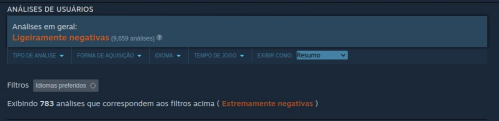
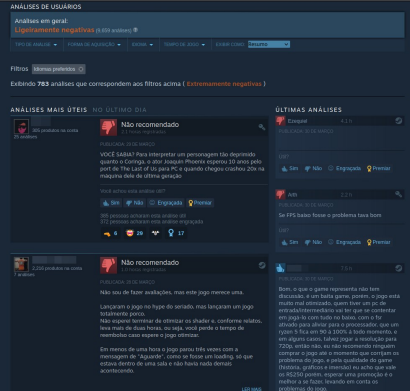

What can we think about this? Testing was missing
The PC release did not have a demo version for users to test. Clearly, the quality team did not test enough, or did not test at all, before approving the release. Performance is far below the available minimum requirements, consuming all the hardware resources even on high-end PCs.
What could cause a system, application, or game to have so many problems?
A lack of seriousness toward the end user: talk to users and release a test version so they can try it on their devices or platforms and see how it behaves. Involving real users in development should not be a challenge or something to fear. If the team is afraid to show its work, something is wrong.
Not talking to your team: sometimes, and often, the team does not communicate or interact. That is the perfect recipe for disaster. A daily meeting should not be a status report. Technical conversations need enough clarity, with collaborative work and minute-by-minute communication. When the team communicates this way, daily or weekly ceremonies are unnecessary because everyone already understands what is happening and how things stand.
Not including quality from the start: a new project should include testing and refinement and validation of the collected requirements, remember the users and the defects found in code and documentation. Every development activity has a corresponding testing activity. Testing involves every stage of the software development lifecycle. What are the priorities, risks, product type, and project goals? It may be necessary to combine and organize tests and their levels.
Not completing testing: review defect reports, create a test summary for project management, analyze lessons learned from defects and reports, and improve process maturity. How can a stage or task be finished without completing its testing?
A lack of test work products: work products are deliverables from each testing activity. We need planning, through a test plan, and analysis of conditions, defects, and priorities. We also need monitoring and control, through progress, summary, and completion reports.
Managing fear: when afraid, we communicate less, hesitate often, and withdraw from recurring feedback. A team that manages fear communicates clearly and frequently. It does not hesitate to learn something new and share it. It asks for more feedback to seek improvements.
We can imagine something at this level happened during the game’s development. How do we know? The result is there. It is unacceptable to keep seeing errors like these in games. Let us use good practices and understand the importance of software testing throughout the project and process. Now we can only wait for new fixes and a drastic improvement as soon as possible.
Sources for research and reading
TDD — Test-Driven Development — Kent Beck — Book here.
Link to Naughty Dog feedback.
Adrenaline video: The Last of Us Part 1 on PC — testing hardware live! Adrenaline video: Resident Evil 4 Remake — is it good on PC? [review]
Adrenaline video: The Last of Us Part 1 — five reasons it is one of the worst ports ever made.

A tip for improving team communication
Try tools people feel comfortable with. Examples for communication are Gather Town and Discord.
Create relaxed environments that bring clarity to communication and help people understand their colleagues better.
Take part in code reviews and project development too.