Refactoring my blog
Analysis of the notion-blog repository
My personal blog was full of bugs because I had not done the necessary maintenance since creating it, perhaps two years ago. Now the idea is to fix bugs and add features I would like.
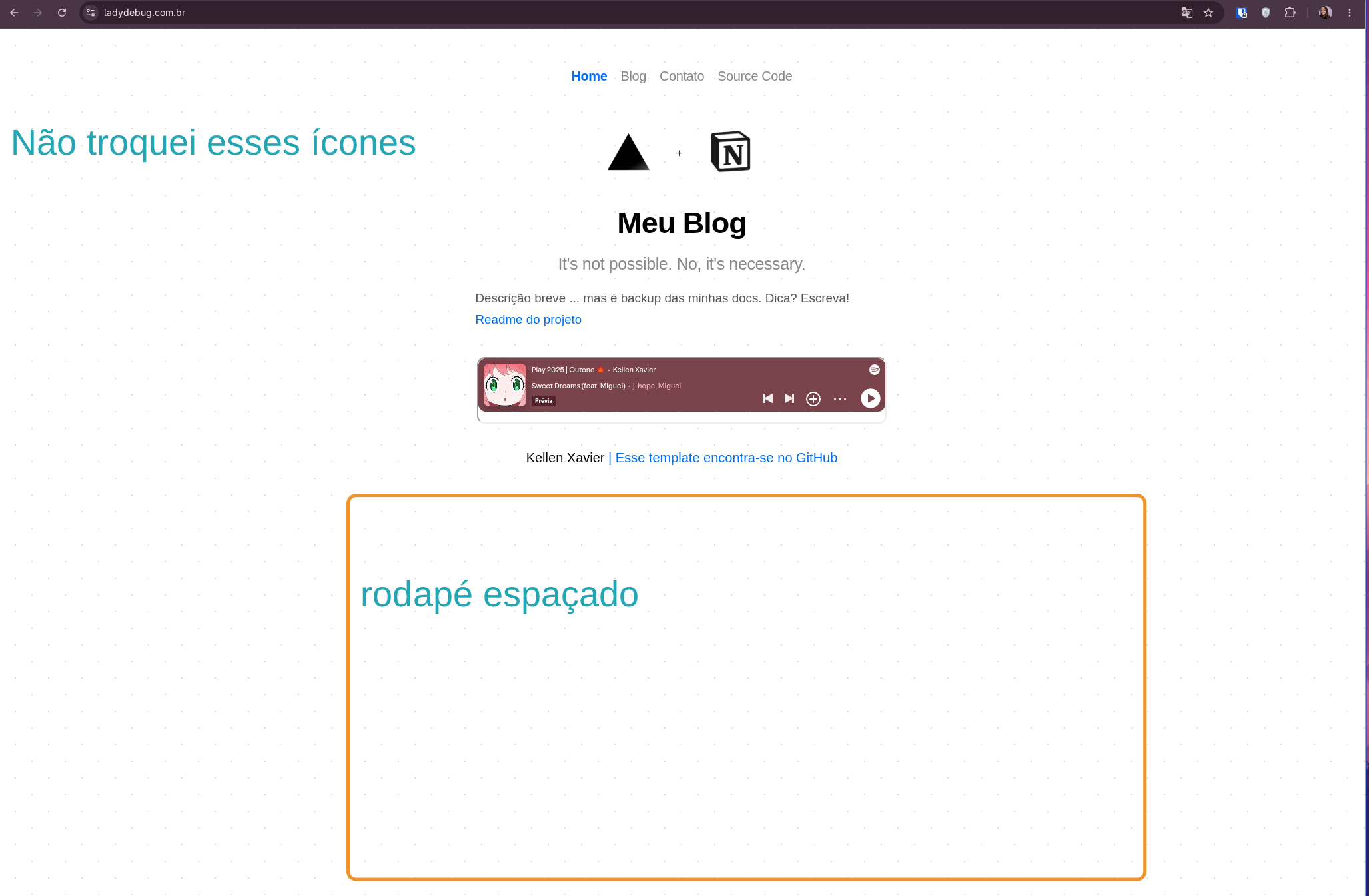
Broken pagination, slow loading, and content centralized in one tool.
What I want to improve: decentralize the content, organize routine versioned backups, and deploy to dev as well as main.
1. Overview
It is a static Next.js blog using Notion as its CMS/backend. It is a fork of the original ijjk/notion-blog template, customized by me. Post content lives in a Notion table, and the site is generated through SSG, Static Site Generation, with incremental revalidation, hosted on Vercel.
- Current deployment:
https://notion-blog-lake-two.vercel.app/ - Current branch:
claude/repository-analysis-ieglo6, identical to develop, with no differences. - License: present,
license.
2. Stack and dependencies
| Layer | Technology |
|---|---|
| Framework | Next.js ^11.1.2, Pages Router |
| UI | React 17, CSS Modules |
| Language | TypeScript 5.8, with strict: false |
| Content | Unofficial private Notion API, www.notion.so/api/v3 |
| Extras | katex, equations; prismjs, syntax highlighting; @zeit/react-jsx-parser; async-sema, rate limiting; github-slugger |
| Quality | Prettier, lint-staged, pre-commit |
| Deployment | Vercel |
3. Structure
src/
├── pages/
│   ├── index.tsx          # Home
│   ├── contact.tsx        # Contato (GitHub/LinkedIn)
│   ├── blog/index.tsx     # Lista de posts (getStaticProps)
│   ├── blog/[slug].tsx    # Renderiza 1 post (getStaticProps/Paths + fallback)
│   └── api/               # asset.ts, preview.ts, preview-post.ts, clear-preview.ts
├── lib/notion/            # Integração com o Notion (rpc, getBlogIndex, getPageData…)
├── lib/build-rss.ts       # Gera feed Atom em /public/atom no build
├── components/            # Header, Footer, Code, Equation, Counter, SVGs, SpotifyPlayer…
└── styles/                # CSS Modules + global.css
scripts/create-table.js    # Cria a tabela-modelo no Notion via API privada
4. How it works — Data flow
rpc.tssends authenticated POST requests to Notion’s private endpoint using thetoken_v2=$NOTION_TOKENcookie.getBlogIndexloads the table,BLOG_INDEX_ID, builds the post map throughgetTableData, which interprets the Notion collection schema, and fetches previews for the 10 most recent posts with concurrency limited to three throughasync-sema. It uses disk caching,.blog_index_data*, during builds,USE_CACHE.blog/index.tsxfilters drafts in production,Published === 'Yes', and lists posts.blog/[slug].tsxretrieves post content throughgetPageDataand paginatedloadPageChunk, resolves tweet embeds, and uses a large switch to convert each Notion block type into JSX: text, header, image, code, quote, callout, equation, bookmark, tweet, and others.api/asset.tsacts as a proxy: it retrieves the signed Notion file URL withgetSignedFileUrls, then redirects with status 307 to serve images and videos.build-rss.tsruns at build time and generates the Atom feed at/public/atom.- Preview mode:
api/preview.tsandpreview-post.tsenable Next’s draft mode.
5. Strengths
- A lean architecture with clear separation between lib, pages, and components.
- Correct use of SSG with
revalidate, ISR, andfallback: true. - Preview-fetch rate limiting and build caching.
- Rich Notion block support: KaTeX equations, Prism code, callouts, bookmarks, videos, tweets.
- Formatting tools: Prettier and lint-staged.
6. Problems and risks I found
Security and practical concerns
NOTION_TOKENused as the preview password:preview.tsandpreview-post.tscomparereq.query.token === process.env.NOTION_TOKEN. This puts the secret Notion token in the URL, exposing it to logs, history, and referrers. A separate secret such asNEXT_PREVIEW_SECRETshould be used.- Private Notion API,
token_v2and/api/v3: unofficial, potentially subject to breaking changes, and the token is your personal session. The preferred approach is migration to the official Notion API,@notionhq/client. api/asset.tsis an open proxy,Access-Control-Allow-Origin: *, signing URLs for any suppliedassetUrlorblockId. It is worth restricting.
Undeclared dependencies
node-fetch,@next/env, andshell-quoteare imported but absent from package.json, working only through transitive dependencies or hoisting. This is fragile and can break builds with a clean lockfile. They should be explicit dependencies.
Leftovers from the original template and inconsistent branding
header.tsx: the Source Code link and OG image point toijjk/notion-blogandnotion-blog.now.sh, whose now.sh domain is disabled; Twitter points to@_ijjk.footer.tsx: links to ijjk’s repository.index.tsx: still uses the Vercel + Notion image and branding.- Generic metadata and
<title>, such as My Notion Blog and An example Next.js site… - Mixed Portuguese and English in the interface.
Potentially broken or fragile code
- Tweet embeds use
api.twitter.com/1/statuses/oembed.json, the discontinued v1 API, and probably no longer work. [slug].tsxusesunstable_revalidate, an old API ignored in Next 11, alongsiderevalidate.equation.tsx:render()can returnundefinedif an error is not aParseError, becauseresultis never assigned.getPageDataremoves table blocks with a fixedsplice(0, 3), which is brittle.- Inconsistent Node versions: the README asks for Node
>=18, butgetBlogIndex.tsusesArray.prototype.toSorted(), requiring Node 20+. Meanwhile,vercel.jsonforces-openssl-legacy-provideras a workaround for old builds. I recommend explicitly fixing Node 20.
Quality and maintenance
tsconfigusesstrict: false, reducing type safety, with many uses ofany.- No tests or CI, with
.github/absent. - Small README errors, such as using
´´´instead of Markdown code fences.
7. Prioritized recommendations
- Replace the preview secret with a dedicated variable, avoiding
NOTION_TOKENin the URL. - Declare
node-fetch,@next/env, andshell-quotein package.json. - Update branding: links, OG image, title, and Twitter should use mine, removing ijjk and now.sh leftovers.
- Fix or remove tweet embeds, the dead v1 API, and
unstable_revalidate. - Align the Node version, fixing
engines: node >=20because oftoSorted(). - In the medium term, migrate to the official Notion API and consider upgrading Next.js from version 11 for security and performance.
Blog fixes
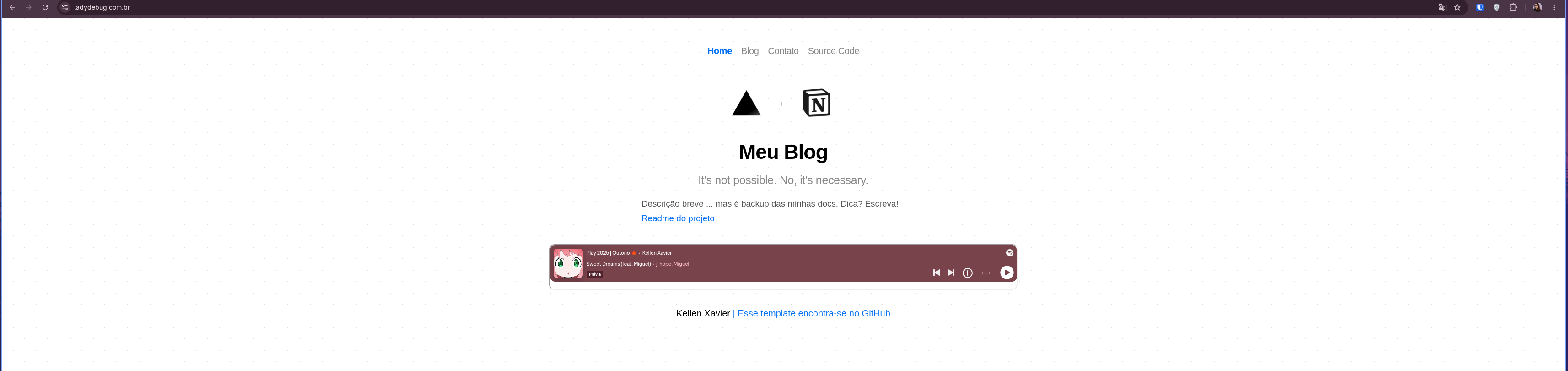
First I requested an analysis through claude.ai, then wrote the following instructions:
📚 claude/repository-analysis-ieglo6? I can start with low-risk, high-impact changes: package.json dependencies, branding, the preview secret, and small bugs. Since this was an analysis task, I have not made changes yet.
Implement as follows.
- Fix the issues and always run the necessary tests. Do not implement without testing.
- Open PRs after validation tests.
- Handle sensitive updates carefully to avoid breaking production.
- Document changes only in my kellen-xavier repository.
- Create /docs for documentation.
- Do not share keys or sensitive data, including in documentation or README.md.
- Create an .agents setup for persistent information.
- Include .AGENTS.md in the setup.
Pay attention and test at every step.
| Stage | Change | Validation |
|---|---|---|
| Dependencies | Declared node-fetch@2.6.1, @next/env@11.1.2, shell-quote@1.7.2 as dev, and @types/node-fetch; added engines.node >=20 and typecheck/test scripts | Passing tsc |
| Security, sensitive | Dedicated PREVIEW_TOKEN in src/lib/preview-auth.ts, with fallback to NOTION_TOKEN to avoid breaking production | Four tests: 401, 404, success, fallback |
| Branding | Removed ijjk and now.sh leftovers from header, footer, and server constants | Regression test |
| Bugs | equation.render never returns undefined; unstable_revalidate replaced by revalidate; dead v1 tweet oEmbed replaced by publish.twitter.com | Render test and build |
| Docs | /docs with SETUP, ARCHITECTURE, SECURITY, CHANGELOG, only in my repository | — |
| Agents | AGENTS.md in the root and .agents/ for persistent context and conventions | — |
- For
.AGENTS.md, with a leading dot, I used the standardAGENTS.mdconvention at the root, the name agent tools recognize, plus an.agents/folder for persistent setup. - The PR targeted develop, the repository’s default branch, in four thematic commits.
How did it turn out?
I was still using Notion, but wanted to extract all the text and keep it in my own repository. That started the migration to a different layout: the Hextra template. I used AI to migrate the posts first. Since Notion can export Markdown files, moving everything at once was simpler. Then I configured the new template, added the features I wanted, and adapted its cleaner, simpler layout. This continues in “Refactoring the blog — part 2”, which is still a draft.